
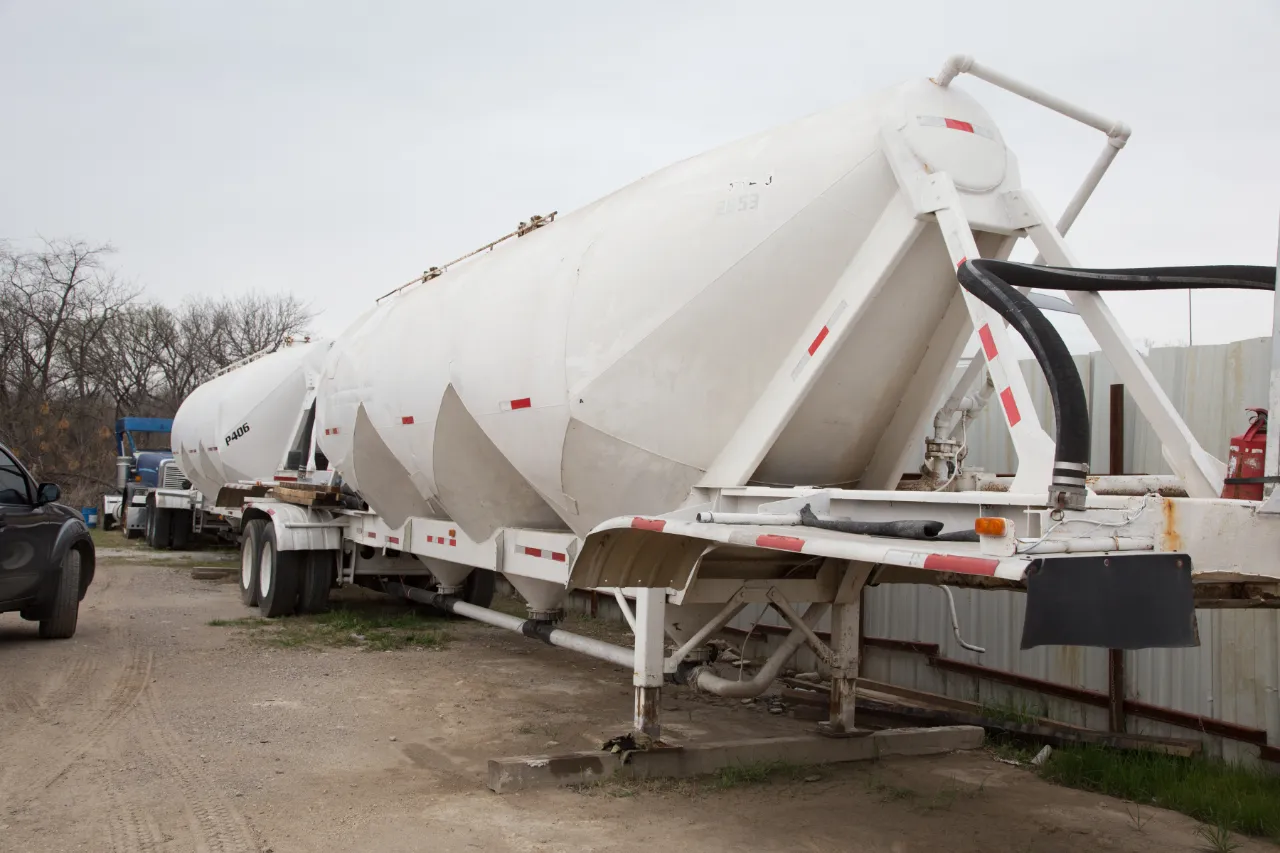
DOT/Compliance Angle: Body Damage That Can Put Your Truck Out of Service
Roadside enforcement programs can remove a commercial vehicle from service when an inspector finds a condition that creates an imminent hazard. According to the out-of-service criteria, an out-of-service (OOS) action applies when a vehicle’s condition or cargo securement significantly increases the risk of serious injury if it continues to operate, and the vehicle must not resume operation until the necessary repairs eliminate the OOS condition.
The practical implication is clear: DOT out-of-service body damage is not just cosmetic. Damage to cabs, trailer structures, lighting housings, glazing, mounting points, and guards can cause immediate OOS conditions or contribute to them by allowing critical parts to shift, loosen, or contact moving components.
Regulators regularly update the North American OOS thresholds; the criteria are revised each year and become effective on April 1. This yearly schedule emphasizes that your inspection results depend on your vehicle’s condition on the inspection date, evaluated against the current criteria.
Why “Body Work” Becomes a DOT Compliance Issue
Federal rules require motor carriers to regularly inspect, repair, and maintain vehicles under their control, ensuring that parts and accessories remain in safe, proper working condition. This broad responsibility includes many “body-related” items—especially when body damage affects the installation, protection, or function of safety systems such as lighting, braking, air plumbing routed along the frame, or fuel-system supports.
Additionally, drivers must not operate a commercial motor vehicle unless they are sure that the vehicle’s key safety-related parts and accessories are in good working condition, and they must conduct a pre-trip review that includes verifying the vehicle is in a safe operating state and, when required, reviewing and signing the most recent inspection report. These duties increase the importance of visible damage, because an inspector can reasonably expect that obvious defects should have been identified and fixed before operation.
What Inspectors Commonly Evaluate in a Walk-Around Inspection
A walk-around roadside inspection usually covers items that directly overlap with body and collision repair issues, such as frame damage, fuel systems, lighting devices, tires, trailer bodies, and windshield wipers. These categories are explicitly listed among standard inspection items for common inspection levels, which is why body damage affecting these systems can quickly become a concern during enforcement.
From a compliance perspective, it is useful to consider the exterior structure as part of the functional safety infrastructure rather than just an aesthetic. When a cab panel shifts, a fairing is torn, a trailer rail is bent, or a guard is damaged, the key compliance question becomes: does the defect cause a safety device to fail, or does it permit shifting or contact that creates an immediate hazard?
Body Damage That Can Trigger an Out-of-Service Condition
1) Damaged or Inoperative Required Lighting and Rear Signals
Lighting failures often follow body damage because collisions and impacts usually break lenses, deform housings, cut wiring, or alter aiming and visibility. For example, when lights must be on, OOS criteria cover situations such as a towing vehicle missing at least one working low-beam headlamp and rear lighting issues, including tail lamps that aren't fully operational.
The criteria also specify OOS conditions related to rear conspicuity and communication with surrounding traffic. An inspector can declare a vehicle OOS if the rear of the single unit (or the rearmost unit in a combination) lacks at least one working stop lamp visible at 500 feet, excluding center high-mounted stop lamps, and if the rearmost vehicle does not have an operative rear turn signal visible on each side, with an exception for a truck tractor operated as a single unit when front signals are visible from the rear.
Federal equipment rules require commercial motor vehicles to comply with lamp and reflective-device standards, including the basic requirements of the federal lighting standard in effect at the time of manufacture. Therefore, collision repair that restores lamp function, secure mounting, and proper visibility is not just “body work”; it is a direct compliance issue.
A final detail is important in practice: when a lamp is working but fails a positional or similar compliance requirement, inspectors might treat it as a violation rather than an Out of Specification (OOS) condition under the OOS framework. That distinction makes correct repairs crucial, but it also highlights that the quickest way to prevent an OOS event is to restore the lamp's operability and visibility after any impact.
2) Windshield, Glazing, and Driver Visibility Obstructions
Damage to the windshield and accompanying add-ons (such as temporary coverings, improperly installed devices, and excess stickers) can create compliance issues if they block the driver’s view. Federal regulations specify limits on devices mounted inside the windshield, including size restrictions and the requirement that they stay outside the driver’s line of sight to the road, highway signs, and signals.
From a body-work perspective, the priority is not aesthetic; it's visibility management. When repairing collision damage around the windshield opening, make sure the finished work does not create new obstructions or improperly placed items that diminish effective sightlines.
3) Driver-Side Windshield Wiper Failures During Inclement Weather
Windshield wipers can become a roadside issue after cab damage, broken linkages, crushed cowl areas, or electrical faults caused by impact. Federal rules require windshield wiping (and washing) systems that meet the applicable federal performance standard based on the vehicle’s manufacturing date.
The OOS threshold is also clear: a power unit can be declared out of service if the driver-side wiper is inoperative, missing, or damaged to the point of being ineffective when weather conditions require wiper use. This creates a real-world compliance risk: a defect that seems tolerable in dry conditions can become an immediate OOS condition when the weather changes.
4) Tire-to-Body Contact Caused by Deformed Panels, Bent Brackets, or Shifted Structure
Body damage can cause clearances to disappear. The OOS criteria define an OOS condition when any situation — including loading — results in the body or frame touching a tire or any part of the wheel assemblies during inspection. Additionally, tire criteria consider a tire mounted or inflated so that it contacts any part of the vehicle as an OOS condition, with an important clarification: the OOS condition exists only if contact can be made at the time of inspection, and a rubber mudflap touching a tire is not, by itself, an OOS condition.
This category often follows collisions because impacts can bend fenders, steps, brackets, and aerodynamic components into the wheel path. It can also occur after repairs that restore appearance but fail to restore proper structural alignment or clearance under suspension travel. The compliance test is practical and quick: if the tire contacts the body or frame during inspection, the vehicle can be taken out of service until it is corrected.
5) Structural Trailer Body Damage in the “Bay Area” That Signals Collapse Risk
Trailer body damage can cause OOS conditions if it indicates structural failure in key load-bearing areas. The OOS criteria define out-of-service states for van and open-top trailer bodies connected to structural parts such as upper and lower rails, floor crossmembers, and fiberglass-reinforced plywood side panels—especially when failures occur in the trailer “bay area” (as defined in the criteria). Damage such as breaks, flange separation, buckling/cracking with missing or loose adjacent fasteners, sagging floors, or multiple detached or sagging crossmembers also trigger these conditions.
The criteria also include significant limitations and notes that influence enforcement outcomes. For instance, OOS conditions generally apply when failure occurs within the specified bay area, and shorter trailers (30 feet or less) have different susceptibility considerations. Only certain rail breaks with sagging qualify as OOS for these trailers. This detail is important because it links “damage location” and “damage effect” to whether the issue becomes an immediate hazard under the OOS framework.
When body work includes straightening, rail repair, crossmember replacement, or panel reconstruction, the primary concern is structural integrity—not just surface appearance. If damage causes freight to protrude or sagging crossmembers, the OOS criteria consider that an out-of-service situation.
6) Fuel Tank and Fuel System Conditions Linked to Mounting Damage
Fuel-system exposure can result from side impacts, curb strikes, and failures of straps or brackets. According to the OOS criteria, a fuel system with a leaking drip at any point can be considered out of service, and a fuel tank that is not securely attached to the vehicle can also lead to OOS action. Federal fuel-system regulations broadly cover systems that contain or supply fuel for vehicle operation, as well as auxiliary equipment used with motor vehicles.
This is where collision repair and mechanical compliance intersect: a “body-related” failure of tank straps, mounts, steps, or side guards can lead to a fuel-system OOS exposure if it results in an unsecured tank or causes leakage. The legal and enforcement perspective isn't about cosmetic condition; it's focused on securement and leak severity.
7) Frame or Structural Member Damage That Permits Shifting Onto Moving Parts or Undermines Component Support
Body damage can conceal or cause structural issues, especially when an impact transfers force into the chassis. OOS criteria identify out-of-service conditions where a cracked, loose, sagging, or broken frame siderail allows the body to shift onto moving parts or signals an imminent collapse risk, and where cracked, loose, or broken frame members negatively affect the support of functional components such as steering gear, fifth wheel, engine, transmission, body parts, and suspension.
From a practical perspective, collision repair involving cab mounts, sleeper mounts, crossmembers, or frame-adjacent structures should be considered with “component support” in mind. If the structure no longer securely supports critical systems, the condition matches the OOS concept of an imminent hazard.
8) Rear Impact Guard (Underride Guard) Damage on Trailers and Semitrailers
Rear impact guards can pose compliance issues after rear-end crashes, dock impacts, or improper towing and recovery. Federal regulations specify that certain trailers and semitrailers (including those built on or after certain dates and over specific weight limits) must have a rear impact guard that meets the federal standards. Federal safety standards outline the scope and purpose of rear impact guards, as well as the protection requirements for trailers and semitrailers.
OOS-related guidance also highlights how enforcement handles certain rear impact guard details in service. For example, guidance states that inspectors should focus on condition and compliance aspects such as connection points, width, height, rear surface, and cross-section. It also clarifies that certification or labeling requirements related to manufacturing should not be considered in-use violations, as sometimes assumed.
From a bodywork perspective, this means a bent or torn guard is not just a “bumper issue.” It is a regulated protective structure with specific physical requirements, and repairs must restore functional compliance—not merely reattach the most visible piece.
How Body Damage Can Affect Brake Safety Indirectly
Collision damage often concentrates around the frame rails, cab step areas, and under-cab zones—areas that also contain safety-critical pneumatic components. Heavy-duty vehicles usually use compressed-air brake systems instead of hydraulic systems. These systems depend on stored compressed air in tanks (typically mounted on the frame under the cab) and air lines that direct it to service chambers at the wheels.
When impact damage deforms the under-cab structure, mounts, or protective panels, it can create secondary risks, such as pinched or abraded air lines or shifted components. While those mechanical defects are not “body damage” in the cosmetic sense, they can originate from the same collision event and may be identified during inspection as safety-related defects under the broader maintenance requirement that parts and accessories remain in safe and proper condition.
What “Out of Service” Means Operationally After an Inspection
An OOS designation is not a warning; it is a restriction. The OOS framework requires authorized personnel to declare any commercial motor vehicle out of service if it presents an imminent hazard. That vehicle may not be operated until all required repairs are completed and the violation no longer exists. An out-of-service sticker is applied when a vehicle is placed OOS under jurisdictional procedures.
The criteria also address the practical movement restriction: once a vehicle is declared out of service, it cannot be moved under its own power to a repair location, except as limited by the criteria. This is why quick, accurate repairs are important: an operational disruption isn't just a citation; it can stop the trip and require coordinated repair and verification before resuming.
A Formal, Body-Focused Pre-Trip Checklist for Compliance Risk Reduction
You can lower the risk of a body-damage-driven OOS event by aligning your walk-around with items typically inspected during roadside checks and with the driver’s duty to verify safe operating conditions before driving.
Use this checklist after any impact event (including low-speed yard incidents), and include it in routine preventive maintenance discussions when damage is present.
- Verify that rear lighting functions—tail lamps, stop lamps, and rear turn signals—are working properly and that visibility is not impaired by cracked lenses, missing housings, or obstructions.
- Ensure windshield visibility is not blocked by damage coverings or devices/stickers placed outside authorized areas.
- Ensure the driver-side wiper works properly when needed, and address any collision-related wiper issues as an urgent matter.
- Inspect wheel wells, fenders, steps, and fairings for any deformation that causes tire-to-body contact when the vehicle is at rest; consider contact an immediate compliance risk.
- Inspect trailer rails, crossmembers, and panels—especially in the designated bay area—for cracks, flange separation, buckling with loose or missing fasteners, sagging floors, or protruding freight conditions.
- Inspect fuel tank mounts and straps after side impacts, and address any unsecured attachments or dripping leaks as a stop-condition until repaired.
- Inspect the rear impact guards on applicable trailers for damage that affects physical compliance, such as mounting integrity and required geometry, especially after rear impacts or dock strikes.
Conclusion
You can treat body damage as a compliance issue rather than just a cosmetic problem. Federal requirements mandate regular maintenance and safe operating conditions, and roadside enforcement can impose Out-of-Service (OOS) restrictions when defects pose immediate hazards. In practice, issues like damaged lighting, reduced visibility, driver-side wiper failures in bad weather, tire contact with the body, structural failures of the trailer rails or crossmembers, unsecured fuel tanks, and damaged rear impact guards can halt a trip right away.
If you operate in or through Dallas, TX, and identify collision-related damage that could involve DOT compliance, you should document the defect, remove the vehicle from service when appropriate, and consult a qualified heavy-duty repair facility for a compliance-focused assessment and repair plan. Lone Star Tire & Diesel Service can be a practical local starting point for coordinating that evaluation.
More Articles
.webp)
What Drivers Need to Know About Heavy-Duty Tire Problems
Learn when truck tire repair is possible, what causes commercial tire damage, when replacement may be necessary, and how preventive tire maintenance can reduce roadside trouble.
.webp)
Dallas Heat vs. Your Axles: How Triple-Digit Temps Cook Differentials, Axle Seals, & Wheel Bearing
High temperatures in Dallas and slow traffic heighten heat stress on vehicle parts like differentials, seals, and bearings. Regular maintenance, proper lubrication, cooling, and early inspections are essential to prevent failures and stay safe during summer driving.
.webp)
5 Things to Consider Before a Diesel Engine Conversion
Diesel engine conversions are popular among truck owners for their increased torque, improved fuel efficiency, and extended engine life. Converting from gasoline to diesel is a complex process, requiring careful planning, technical expertise, and awareness of regional factors, especially in North Texas. Key considerations include compatibility and emissions.

Contact Us to Schedule Service
Call us now for 24/7 roadside assistance in Dallas, TX & the surrounding area or to schedule service.